
How do I know if my heavy periods and pelvic pain could be fibroid symptoms?
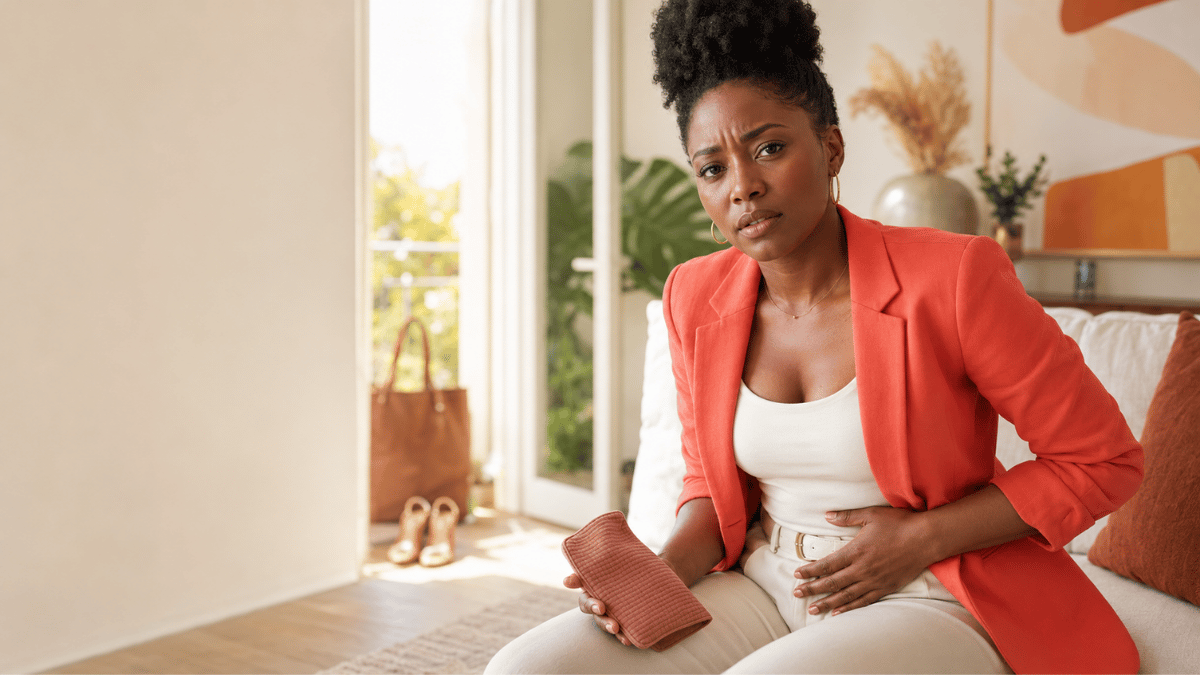
Yelling Ant’s TL;DR — Uterine fibroids are almost always noncancerous growths, but their symptoms can seriously limit work, relationships, movement, sleep, and joy. Black women develop fibroids more often, at younger ages, and may experience larger growths and more severe symptoms. Heavy bleeding, worsening pain, pelvic pressure, anemia, and bladder or bowel changes deserve investigation—not dismissal. Symptoms alone cannot confirm fibroids, so ask a qualified healthcare professional about an examination, bloodwork, and appropriate imaging.
by Yelling Ant Editors – https://YellingAnt.com
Some Black women do not realize how much of their lives they have surrendered until every outing requires bathroom planning, extra clothes, pain medicine, or an escape route. Fibroids can be silent, but symptomatic fibroids may turn “normal periods” into a monthly emergency. Research estimates that more than 80% of women of African ancestry may develop fibroids during their lifetime, although many never have symptoms. Your pain is not a personality trait, and suffering is not the price of womanhood.
Key details worth tracking include:
• How many days you bleed and how quickly you soak period products.
• The size of clots and whether bleeding escapes your protection.
• Which activities, workdays, trips, or intimate moments symptoms make you miss.
- i. Periods That Feel More Like Hemorrhaging
Heavy menstrual bleeding means bleeding that interferes with your physical, emotional, social, or material quality of life—not merely a period that is inconvenient. Bleeding for more than seven days, soaking through protection repeatedly, or needing double protection deserves medical attention. Fibroids are one possible cause, but adenomyosis, bleeding disorders, thyroid problems, and other conditions can look similar. Ask for an evaluation instead of accepting, “Some women just bleed heavily.”
- ii. Clots, Flooding, And Surprise Bleeding
Passing large clots, waking in a blood-soaked bed, or bleeding through clothes at work is not something you should have to organize your entire life around. Fibroids that grow toward the uterine cavity may contribute to longer, heavier, or more frequent periods. Bleeding between periods is abnormal uterine bleeding, meaning bleeding that differs from your usual menstrual pattern. Record when it happens and show that history to your healthcare professional.
- iii. Cramps That Cancel Your Plans
Pain that keeps you home, wakes you from sleep, or makes you unable to stand upright is not “just cramps.” Fibroid-related pain may feel dull and heavy, sharply intense, or like constant pressure that worsens during menstruation. Pain severity does not always match fibroid size because location and number also matter. When pain repeatedly controls your calendar, it has already become a quality-of-life problem.
- iv. Exhaustion That Sleep Never Fixes
Heavy blood loss can cause iron-deficiency anemia, a condition in which the body lacks enough healthy red blood cells or iron to carry oxygen effectively. Warning signs may include exhaustion, weakness, dizziness, headaches, shortness of breath, a racing heart, or difficulty concentrating. Do not let anyone reduce that level of depletion to stress or a busy schedule. Ask whether you need a complete blood count and iron studies, including ferritin.
Your life should not have to grow smaller to make room for untreated symptoms—claim more health truths at https://YellingAnt.com/colony/fibroidsrealtalk.
- v. A Belly That Keeps Growing
Fibroids can enlarge the uterus or lower abdomen, sometimes creating fullness, swelling, or a pregnant-looking belly that does not respond to weight loss. You may notice that pants stop fitting even when the rest of your body has not changed. Bloating has many possible causes, so appearance alone cannot diagnose fibroids. Persistent abdominal growth or pelvic fullness deserves an examination and appropriate imaging, often beginning with an ultrasound.
- vi. Living In The Bathroom
Frequent urination may be blamed on water, caffeine, age, or a “small bladder,” but fibroids can press against the bladder. Some women feel a constant urge yet still struggle to empty it completely. That pressure can interrupt sleep, meetings, workouts, road trips, and any moment without quick bathroom access. Tell your clinician about frequency, urgency, nighttime bathroom trips, and trouble emptying your bladder.
- vii. Constipation That Will Not Let Up
Fibroids pressing toward the rectum may contribute to constipation, rectal pressure, abdominal cramping, or difficult bowel movements. When you are already treating constipation but still feel blocked or unusually full, pelvic pressure may be part of the picture. Digestive conditions can cause similar symptoms, so avoid diagnosing yourself from one sign. The important clue is a persistent change—especially when it appears alongside heavy bleeding or pelvic pressure.
- viii. Back Pain Nobody Connects To Your Uterus
A stubborn ache in the lower back may not begin in your back at all. Larger fibroids or growths positioned toward the back of the uterus can produce pressure that feels muscular, heavy, or difficult to pinpoint. If massages, stretching, and pain relievers never fully solve it, mention your menstrual and pelvic symptoms during the same appointment. Connecting those dots may change the questions your healthcare professional asks.
- ix. Sex That Has Become Painful
Dyspareunia is the medical term for persistent or recurring pain during sex, and it should never be dismissed as something you must tolerate. Fibroids can contribute to deep pelvic pain or pressure during intimacy, depending on their size and location. Pain may lead women to avoid closeness, then silently carry shame or relationship tension. Your comfort matters, and painful sex deserves a respectful medical conversation.
Bring the questions you were told not to ask to the Fibroids Real Talk Colony at https://YellingAnt.com/colony/fibroidsrealtalk — Find Your People™. No Code-Switching Needed.
- x. Fertility Or Pregnancy Problems That Arrive Without Warning
Most women with fibroids can become pregnant, and infertility caused by fibroids is considered uncommon. However, certain fibroids—especially those that distort the uterine cavity—may affect fertility, pregnancy loss, or pregnancy complications. If pregnancy matters to your future, ask how each option could affect your uterus and fertility before agreeing to treatment. Myomectomy removes fibroids while preserving the uterus, while hysterectomy removes the uterus, but neither choice should be presented without a complete discussion of alternatives, risks, and your priorities.
- Final Word
Black women have been praised for enduring pain that should have been investigated. Fibroids are usually benign, but a condition does not have to be cancerous to steal your energy, confidence, intimacy, money, or freedom. Seek prompt medical care for severe vaginal bleeding or sudden sharp pelvic pain, and pursue another opinion when your concerns remain unanswered. You deserve a life designed around your dreams—not your symptoms.
Our bodies carry culture, memory, and truth—tell us what you wish someone had explained sooner in the Fibroids Real Talk Colony at Yelling Ant https://YellingAnt.com/colony/fibroidsrealtalk
- Sources
American College of Obstetricians and Gynecologists, “Uterine Fibroids”: https://www.acog.org/womens-health/faqs/uterine-fibroids
American College of Obstetricians and Gynecologists, “Heavy Menstrual Bleeding”: https://www.acog.org/womens-health/faqs/heavy-menstrual-bleeding
Office on Women’s Health, U.S. Department of Health and Human Services, “Uterine Fibroids”: https://womenshealth.gov/a-z-topics/uterine-fibroids
Mayo Clinic, “Uterine Fibroids—Symptoms and Causes”: https://www.mayoclinic.org/diseases-conditions/uterine-fibroids/symptoms-causes/syc-20354288
PubMed, “Epidemiology and Management of Uterine Fibroids”: https://pubmed.ncbi.nlm.nih.gov/31960950/