
“What are the warning signs and symptoms of uterine fibroids in Black women?”
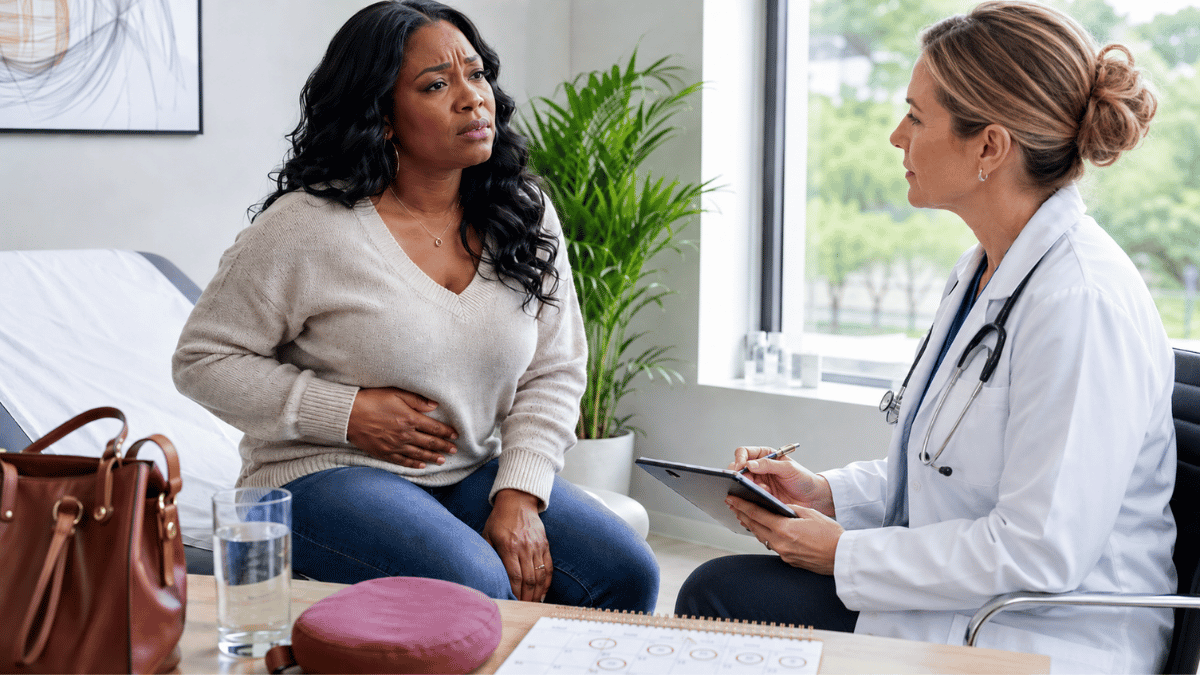
Yelling Ant’s TL;DR — Uterine fibroids are noncancerous muscular tumors that grow in or around the uterus and may cause heavy bleeding, severe pain, pelvic pressure, bladder problems, anemia, and reproductive complications. By age 50, fibroids affect roughly 80% of Black women, according to the National Institutes of Health. Symptoms that disrupt your work, sleep, relationships, or daily activities deserve medical evaluation—not another command to “tough it out.”
by Yelling Ant Editors – https://YellingAnt.com
Black women have turned surviving pain into an art form, but we should never have needed that skill. Fibroid symptoms are often brushed aside as ordinary periods, aging, stress, or something we should quietly manage. Knowing the warning signs gives you language, evidence, and power when asking for an examination, bloodwork, or imaging.
Before an appointment, track these key details:
• Bleeding dates, flow, clots, and products used
• Pain location, severity, and missed activities
• Bladder, bowel, energy, and fertility changes
- i. Periods So Heavy They Control Your Life
Heavy menstrual bleeding can mean soaking through protection rapidly, passing large clots, doubling up on products, or planning your entire day around bathroom access. Fibroids can change the uterus and increase menstrual blood loss. If bleeding repeatedly interrupts sleep, work, travel, or exercise, it is not “just a heavy period.” Ask whether you need a pelvic ultrasound and a complete blood count, also called a CBC.
- ii. Cramps That Feel Like a Full-Body Emergency
Fibroid pain can feel like crushing cramps, stabbing pelvic pain, or pressure that makes standing upright difficult. Painful periods that stop you from functioning deserve investigation, especially when the pain is worsening. Fibroids are not the only possible cause, so a clinician should also consider conditions such as endometriosis or adenomyosis. You do not have to prove your strength by suffering without answers.
- iii. Bleeding When Your Period Is Not Due
Spotting or bleeding between periods can be a fibroid symptom, but it may have other causes that require evaluation. Record when it happens, how long it lasts, and whether it follows sex or exercise. Bleeding after menopause should always be reported promptly. Familiar does not automatically mean harmless.
- iv. Exhaustion That Sleep Never Fixes
Heavy bleeding may cause iron-deficiency anemia, meaning the body lacks enough healthy red blood cells to carry oxygen effectively. Warning signs can include exhaustion, weakness, dizziness, headaches, pale skin, a racing heart, or shortness of breath. Women sometimes blame themselves for feeling unproductive when their bodies are actually depleted. Ask for a CBC and ferritin test instead of accepting “you’re probably just tired.”
Your pain is not the price of being a strong Black woman; knowing what your body is saying can change everything. Get more in the Fibroids Real Talk at https://YellingAnt.com/colony/fibroidsrealtalk
- v. Pelvic Pressure That Never Quite Leaves
Fibroids can create a heavy, dragging, or full sensation in the lower abdomen. You may feel as though something is pressing downward even when your period is over. Location matters: fibroids pressing on nearby organs can produce different symptoms from fibroids growing inside the uterine cavity. Describe the pressure clearly and ask what imaging can show.
- vi. A Lower Belly That Keeps Expanding
Large or numerous fibroids can enlarge the uterus and make the abdomen look swollen or pregnant. Clothes may fit differently even when your eating habits and weight have not significantly changed. Persistent enlargement, firmness, or bloating deserves an examination rather than an assumption about weight gain. The Office on Women’s Health notes that fibroids may range from apple-seed size to grapefruit size.
- vii. Constant Bathroom Trips
Fibroids pressing against the bladder can make you urinate frequently, wake repeatedly at night, or feel an urgent need to go. Some women may also feel that their bladder never empties completely. These symptoms can resemble a urinary problem, which is why the full pattern matters. Mention pelvic pressure and menstrual changes alongside the bathroom trips.
- viii. Constipation or Uncomfortable Rectal Pressure
A fibroid growing toward the back of the uterus can press against the rectum. That pressure may contribute to constipation, difficult bowel movements, or the feeling that you still need to go. Increasing fiber cannot remove a physical mass pressing on another organ. Tell your clinician if bowel changes appear alongside heavy periods or pelvic fullness.
- ix. Pain During Sex or an Aching Lower Back
Pain during sex is not something you owe a partner, and it should never be dismissed as nervousness. Fibroids may cause deep pelvic discomfort during or after penetration, while their size and position may contribute to lower-back pain. Keep track of what triggers the pain and where you feel it. That information can help guide an examination and imaging.
Bring the symptoms nobody understood to the Fibroids Real Talk Colony at https://YellingAnt.com/colony/fibroidsrealtalk — Find Your People™. No Code-Switching Needed.
- x. Trouble Getting or Staying Pregnant
Most women with fibroids can become pregnant, but certain fibroids may affect fertility or pregnancy. The CDC lists infertility and multiple miscarriages among possible fibroid symptoms, while the Office on Women’s Health notes that infertility related to fibroids is rare. If you are struggling to conceive or experiencing pregnancy loss, ask whether the fibroids’ number, size, and location matter. Your fertility goals should be part of every treatment conversation.
- Final Word
Black women should not have to bleed through clothes, work through agony, or collapse from exhaustion before someone believes the problem is serious. Fibroid symptoms are common, but suffering without answers should never be normalized. Document what is happening, request appropriate testing, seek a second opinion when necessary, and remember: being accustomed to pain does not make the pain acceptable.
Your fibroid story could be the truth another Black woman needs—share what you survived and what finally helped in the Fibroids Real Talk Colony https://YellingAnt.com/colony/fibroidsrealtalk at Yelling Ant.
- Sources
Office on Women’s Health, “Uterine Fibroids”
https://womenshealth.gov/a-z-topics/uterine-fibroids
Centers for Disease Control and Prevention, “Common Reproductive Health Concerns for Women”
https://www.cdc.gov/reproductive-health/women-health/common-concerns.html
American College of Obstetricians and Gynecologists, “Uterine Fibroids”
https://www.acog.org/womens-health/faqs/uterine-fibroids
Eunice Kennedy Shriver National Institute of Child Health and Human Development, “Uterine Fibroids and Racial Disparities”
https://www.nichd.nih.gov/newsroom/news/080723-uterine-fibroids-green-tea