
Why is the skin on my scalp getting darker, and how can I safely treat it?
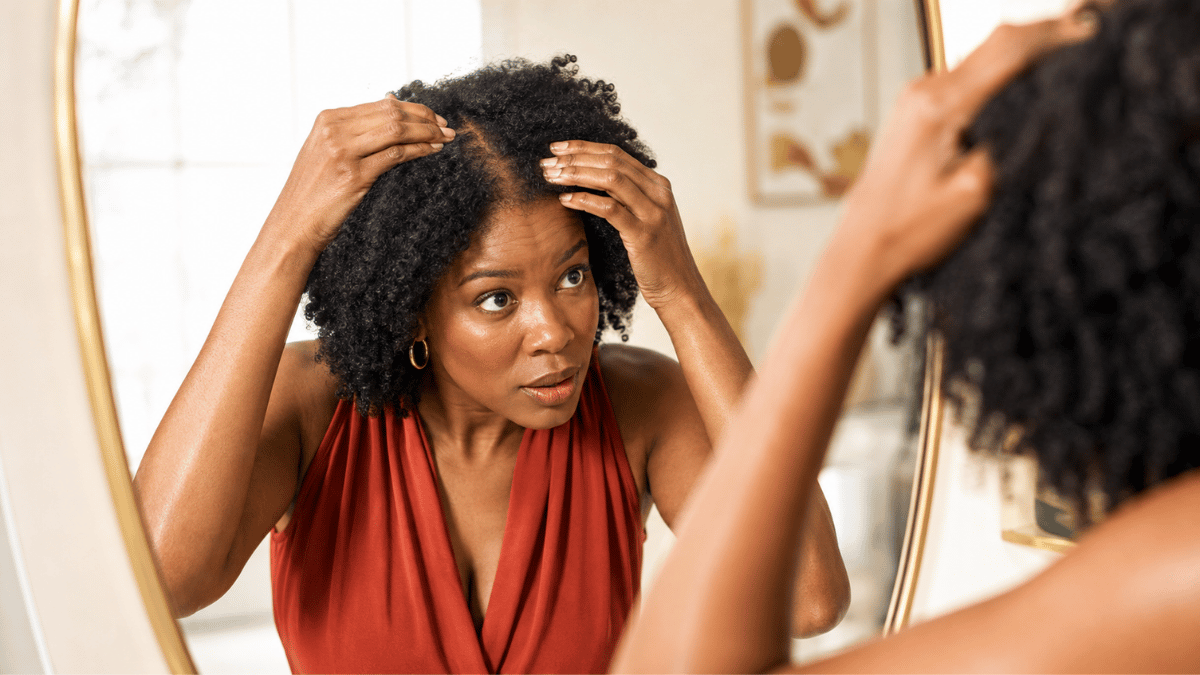
Yelling Ant’s TL;DR — Scalp hyperpigmentation is often the skin’s response to inflammation, irritation, scratching, or injury—not poor hygiene. It can be triggered by dandruff, eczema, psoriasis, folliculitis, hair products, chemical treatments, tight hairstyles, or inflammatory hair-loss conditions. Because discoloration can outlast the original problem for months or years, treating the underlying cause matters more than aggressively bleaching the dark area. New pigmentation accompanied by itching, pain, scaling, sores, or hair loss deserves a dermatologist’s attention.
by Yelling Ant Editors – https://YellingAnt.com
Your scalp may be hidden beneath twists, braids, curls, locs, wigs, or silk presses, but it is still skin—and it keeps receipts. For Black women, irritation may leave behind stubborn brown, gray, or purplish patches long after the burning or itching stops. That discoloration can be frustrating, but it may also reveal what your scalp has been quietly enduring. Here is what every Black woman deserves to know before reaching for another oil, scrub, or “miracle” fading treatment.
Key signs worth watching include:
• Darkening that appears after itching, bumps, flaking, or a chemical service.
• Pigmentation that spreads while the scalp remains tender, sore, or inflamed.
• Dark patches appearing alongside thinning, breakage, or smooth areas of hair loss.
- 1. The Dark Area May Be Evidence of Earlier Inflammation
Post-inflammatory hyperpigmentation, or PIH, is excess color left behind after skin becomes inflamed or injured. When inflammation activates pigment-producing cells, they release extra melanin into the affected area. The original rash, bump, or scratch may disappear while its darker “shadow” remains, making the discoloration look like the problem when it is actually the aftermath.
- 2. Black Skin Can Hold Onto the Evidence Longer
Melanin helps give Black skin its beautiful depth, but pigment-producing cells may respond strongly to irritation. The Skin of Color Society reports that more than 65% of African Americans experience symptoms of PIH. Scalp discoloration can therefore become darker, more noticeable, and slower to fade even after a seemingly minor flare.
- 3. Scalp Inflammation Does Not Always Look Bright Red
Medical descriptions often tell people to look for redness, but inflammation on brown skin may appear deep brown, purple, gray, pink, or lighter than the surrounding skin. Seborrheic dermatitis, for example, can look pink, purplish, or pale on darker complexions. Pay attention to texture, flakes, itching, tenderness, and warmth—not color alone.
- 4. Scratching Can Keep Restarting the Pigment Cycle
An itchy scalp creates a cruel loop: you scratch, the skin becomes injured, inflammation increases, and more pigment can develop. Fingernails may also cause tiny wounds, scabs, or infection, even when you do not see blood. Calming the itch and treating its cause gives the pigment a real chance to fade.
Your scalp is not “too difficult”—it may simply need the informed care Black women have always deserved. https://yellingant.com/colony/blackhaircare
- 5. Your Favorite Hair Product Could Be Part of the Problem
Fragrances, preservatives, adhesives, edge controls, essential oils, relaxers, and hair dyes can trigger irritant or allergic contact dermatitis. The hair-dye ingredient paraphenylenediamine, or PPD, is a recognized contact allergen in sensitive people. If darkening follows a new product or salon service, stop guessing and ask a dermatologist whether patch testing could identify the trigger.
- 6. “Protective” Styling Is Not Protective When It Hurts
Repeated pulling, heavy extensions, tight braids, glued wigs, aggressive brushing, and friction can inflame the scalp. Pain, bumps, crusting, or a headache after styling are warnings—not the price of looking polished. Looser styles, lighter added hair, gentle takedowns, and recovery time can help protect both the scalp and follicles.
- 7. Pigmentation Plus Hair Loss Needs Prompt Attention
Darkening accompanied by burning, tenderness, itching, thinning, or a widening area at the crown may signal more than cosmetic discoloration. Central centrifugal cicatricial alopecia, or CCCA, is a scarring hair-loss condition seen more commonly in Black women and can cause permanent loss. Early evaluation matters because treatment may control inflammation and help prevent additional follicles from being destroyed.
- 8. Fading Can Take Months—Sometimes Years
PIH often improves after the inflammation stops, but deeper pigment usually fades more slowly. The American Academy of Dermatology notes that some dark spots can require months to years to disappear completely. Constantly switching products or scrubbing harder may create fresh irritation and reset that clock.
- 9. Facial Dark-Spot Treatments Do Not Automatically Belong on Your Scalp
Strong acids, retinoids, hydroquinone, peels, and harsh exfoliants may irritate an already inflamed scalp or interact poorly with other treatments. A dermatologist can determine whether the discoloration is superficial, deeper in the skin, or connected to an active disease. The safest plan usually begins with controlling inflammation, removing triggers, and then choosing a pigment treatment suited to the scalp.
Bring your real scalp stories to the Black Hair Care Colony at https://yellingant.com/colony/blackhaircare —Find Your People™. No Code-Switching Needed.
- 10. Not Every Dark Scalp Spot Is PIH
A new or changing spot, uneven mole, sore that will not heal, or area that bleeds requires medical evaluation. Exposed or thinning areas of scalp also need broad-spectrum SPF 30 or higher or a wide-brimmed hat because brown skin can still develop sun damage and skin cancer. Photograph concerning areas in consistent lighting so you can track changes and show your dermatologist exactly what is happening.
- Final Word
Your scalp’s discoloration is not something to scrub away, hide under a wig, or blame on yourself. It is information—and sometimes an early warning that deserves action. Treat the inflammation, protect your follicles, question painful hair practices, and seek a dermatologist experienced with skin of color when symptoms persist. Your crown deserves care that sees the whole woman beneath it.
Our scalp stories sit at the intersection of beauty, health, culture, and identity—share yours and keep the conversation going in the Black Hair Care Colony https://yellingant.com/colony/blackhaircare at Yelling Ant.
- Sources
• American Academy of Dermatology, “How to Fade Dark Spots in Darker Skin Tones”: https://www.aad.org/public/everyday-care/skin-care-secrets/routine/fade-dark-spots
• Skin of Color Society, “Post-Inflammatory Hyperpigmentation”: https://skinofcolorsociety.org/discover-patients-public/public-education/pih
• American Academy of Dermatology, “Central Centrifugal Cicatricial Alopecia Overview”: https://www.aad.org/public/diseases/hair-loss/types/ccca
• American Academy of Dermatology, “Seborrheic Dermatitis Overview”: https://www.aad.org/public/diseases/a-z/seborrheic-dermatitis-overview
• DermNet, “Postinflammatory Hyperpigmentation”: https://dermnetnz.org/topics/postinflammatory-hyperpigmentation
• DermNet, “Paraphenylenediamine and Hair Dye Contact Allergy”: https://dermnetnz.org/topics/allergy-to-paraphenylenediamine
• American Academy of Dermatology, “How to Apply Sunscreen”: https://www.aad.org/public/everyday-care/sun-protection/shade-clothing-sunscreen/how-to-apply-sunscreen