
What is the HBCU student experience really like?
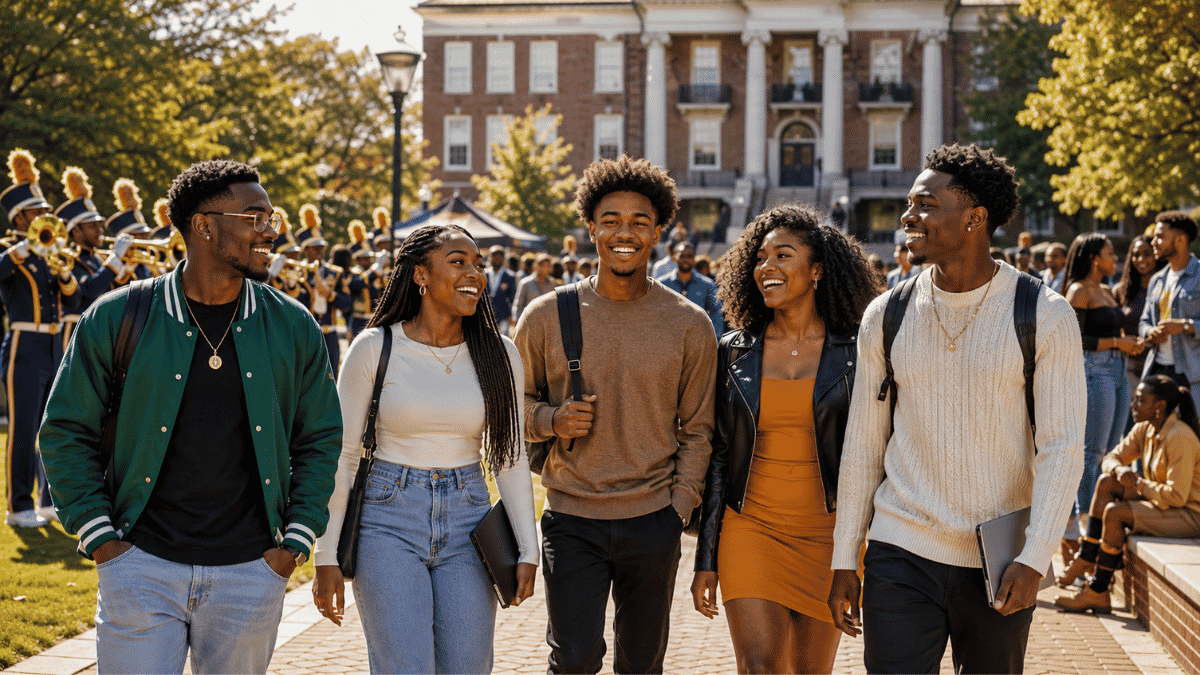
Yelling Ant’s TL;DR — You know you’re a student at an HBCU when college feels like more than classes, credits, and campus life. It feels like legacy, protection, pressure, joy, and purpose all living in the same space. Historically Black Colleges and Universities, or HBCUs, are accredited institutions founded before 1964 with the principal mission of educating Black Americans, and that mission still shows up in everything from professors who learn your name to homecomings that feel like cultural reunions. With 100 HBCUs enrolling more than 304,000 students as of fall 2024, the latest nationwide enrollment figures available, the HBCU experience remains one of the most powerful cultural and academic traditions in America.
There is college, and then there is the HBCU experience. If you know, you know — and if you do not, somebody’s cousin, auntie, professor, line sister, roommate, or marching band section leader is probably ready to explain it with feeling. HBCUs are not perfect, because no institution is, but they carry a kind of soul that cannot be copied by branding, brochures, or a diversity office. Here are 10 ways you know you are truly a student at an HBCU.
- 1. Your Professors Know Your Name, Your Major, And Your Business
At an HBCU, you are not just a student ID number floating through a lecture hall. Your professor may know your name, your hometown, your scholarship situation, and exactly when you stopped turning in your best work. That level of attention can feel intense, but it is also part of the magic. The HBCU classroom often carries the understanding that Black brilliance deserves to be challenged, protected, and prepared for a world that may underestimate it.
- 2. Homecoming Feels Like A Family Reunion With A Soundtrack
HBCU homecoming is not just an event; it is a cultural holiday. The campus turns into a living museum of alumni pride, Greek life, marching bands, vendors, old-school love, new-school fashion, and somebody’s uncle acting like he still has knees from 1994. You see graduates come back not just to party, but to remember who they became there. That is why HBCU homecoming feels less like a weekend and more like proof that the village still exists.
 Visit link
- 3. The Band Can Steal The Show From Literally Anyone
At many HBCUs, the marching band is not background music; it is a headline act. The drumline, dancers, horns, stands, arrangements, and precision carry the kind of energy that makes people stop mid-conversation. Even if you came for football, you know halftime may be the real main event. This is not just entertainment; it is Black performance tradition, musical discipline, campus pride, and generational culture moving in formation.
- 4. You Learn That Excellence Is Expected, Not Surprising
At an HBCU, nobody is shocked that you are smart, talented, ambitious, or creative. That matters because so many Black students have spent years being treated like their excellence needs extra proof. HBCUs were created in a country where higher education was once legally and socially denied to Black people, and that history still shapes the mission. The expectation is clear: you are not here to shrink; you are here to build, lead, and carry something forward.
Continue This Conversation With Students at Your School
Which HBCU traditions make your campus special? From unforgettable homecomings and legendary bands to professors who know everybody's business, every school has its own stories. Your school's Colony on Yelling Ant is a place to celebrate campus pride, share experiences, debate traditions, ask questions, and connect with students and alumni who understand what makes your HBCU unique.
Find your school and join the conversation:
You can also connect with students and alumni from HBCUs across the country in the HBCU Colony.
 Visit link
- 5. You Own At Least One Piece Of School Gear You Treat Like Sacred Property
Your hoodie is not just a hoodie. Your sweatshirt, cap, jacket, tote, or line jacket carries campus pride, city pride, family pride, and sometimes a little friendly rivalry. You might wear it in the airport and suddenly get a “What year?” from someone you have never met. That is how HBCU identity works: the letters on your chest can become an instant conversation, a networking moment, or a reminder that you are part of something bigger.
- 6. The Cafeteria, Yard, Or Student Center Is Basically A Newsroom
If something happens on campus, you may hear about it before the official email drops. The yard, café, student center, dorm lobby, and group chat all have their own reporting system. Some of it is funny, some of it is messy, and some of it is surprisingly accurate. But underneath the jokes is a real community rhythm: people are paying attention, people are connected, and nobody is moving through campus completely invisible.
- 7. You Understand That “Professional Development” Starts Early
At an HBCU, career talk is not saved for senior year. Somebody is always telling you to update your résumé, apply for the internship, speak up in the room, introduce yourself properly, or stop playing with your LinkedIn photo. Organizations like the Thurgood Marshall College Fund and UNCF exist because HBCU talent is not theoretical; it is a national pipeline. TMCF says its scholars reach an 85–90% graduation rate, while UNCF reports HBCUs create $16.5 billion in total economic impact and support 136,000+ jobs.
- 8. You Have Learned The Difference Between Community And Convenience
An HBCU community can be loving, loud, nosy, supportive, competitive, and deeply invested in your future all at once. That is not always convenient, but it is often powerful. You learn how to advocate for yourself, show up for other people, and carry your name with care. The culture teaches you that community is not just who claps for you; it is also who corrects you before the world gets the chance.
- 9. You Know The Yard Is More Than Grass And Sidewalks
The yard is where friendships form, organizations recruit, music plays, outfits speak, causes gather, and confidence gets tested in public. It is where students become visible to each other in the best possible way. On an HBCU campus, the yard often functions like a cultural stage, a town square, and a memory bank. Long after graduation, people may forget a classroom number, but they remember what it felt like to cross that yard and feel seen.
- 10. You Realize You Are Walking Through History While Making Your Own
Being an HBCU student means living inside a legacy that started long before you arrived. Many HBCUs were founded after the Civil War to create educational opportunity for Black people who had been shut out of American higher education. That history is not trapped in the past; it shows up when students lead protests, build startups, become doctors, teach children, run companies, make art, and return as alumni. You know you are at an HBCU when the campus keeps reminding you that your future has ancestors.
- Final Word
The HBCU experience is not one single thing, because every campus has its own flavor, traditions, legends, rivalries, and inside jokes. But the deeper truth is shared: HBCUs give Black students space to be brilliant without apology and human without explanation. They are places where culture is not decoration; it is infrastructure. If you have lived it, loved it, survived it, or are dreaming about it, you already know the lesson: the HBCU experience does not just prepare you for the world — it reminds you that you were never supposed to enter it small.
If HBCU life taught you who you are, what you carry, and why your people matter, bring that story to the HBCU Colony at Yelling Ant and keep the culture talking.
- Don't See Your School? Start Your School's Colony.
 Visit link
Your HBCU has its own history, traditions, legends, rivalries, and stories worth sharing. Why not give your campus a dedicated place on Yelling Ant? Be the person who brings students, alumni, and future students together. Start a Colony where your school can celebrate its culture, share campus news, ask real questions, reconnect with old friends, and build a community that extends far beyond graduation.
- Sources
Pew Research Center — “A look at historically Black colleges and universities in the U.S.”
National Museum of African American History and Culture — “5 Things To Know: HBCU Edition”
https://nmaahc.si.edu/explore/stories/5-things-know-hbcu-edition
UNCF — “2024 Economic Impact Report: Transforming Futures: The Economic Engine of HBCUs”
https://uncf.org/hbcuimpactreport/2024
Thurgood Marshall College Fund — “What We Do: The TMCF Impact”
https://tmcf.org/about-us/what-we-do/
National Center for Education Statistics — “Fast Facts: Historically Black Colleges and Universities”
https://nces.ed.gov/fastfacts/display.asp?id=667/
Pennsylvania-based Postsecondary National Policy Institute (PNPI), HBCU Fact Sheet, January 2026.
https://pnpi.org/wp-content/uploads/2026/01/HBCU_FactSheet_Jan-26.pdf