
How can I tell if my hairstylist really knows how to care for Black hair?
Yelling Ant’s TL;DR — A miracle-worker stylist does more than make your hair look good for the weekend; she protects your scalp, your edges, your time, and your confidence. For Black women, that matters because textured hair can be fragile, and tight styles, heat, chemicals, and ignored scalp symptoms can contribute to breakage or hair loss. The best stylist knows the difference between a cute style and a healthy one, and she is brave enough to tell you when your hair needs care instead of another appointment.
by Yelling Ant Editors – https://YellingAnt.com
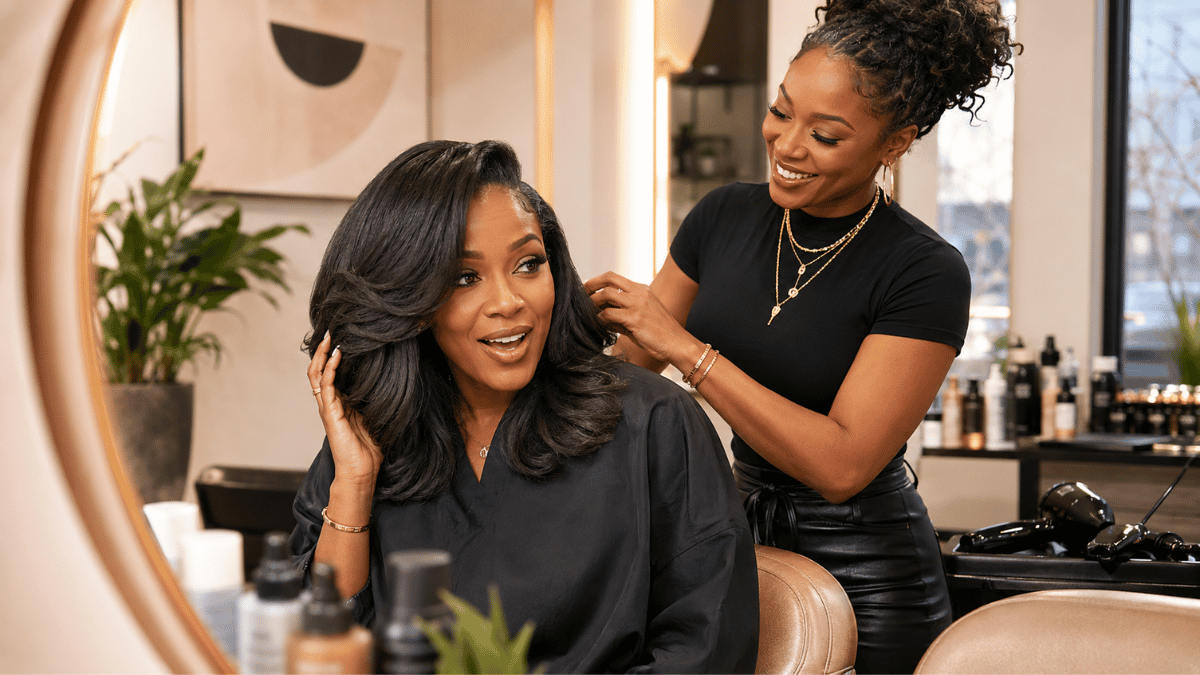
A great hairstylist is not just someone who can slay a silk press, braid a crown, or make a bob sit like it has legal representation. A true miracle worker knows that Black hair is culture, memory, beauty, identity, and science all at once. She understands that healthy hair is not built by force; it is built by listening, patience, skill, and respect. Here are the signs your stylist is not just talented, but gifted.
- 1. She refuses to let pain be part of the appointment.
A miracle-worker stylist does not tell you to “just sit still” when your scalp is screaming. She knows pain equals damage, especially with braids, cornrows, sew-ins, ponytails, loc maintenance, and tight updos. The American Academy of Dermatology (AAD) warns that tight styles can lead to traction alopecia, which means hair loss caused by repeated pulling on the follicle. A stylist who loosens the style instead of defending the tension is protecting your future hairline, not just today’s look.
- 2. She checks your scalp before she touches your hair.
Before the shampoo, before the comb begins to part, before the “what are we doing today,” she looks. She notices flakes, tenderness, redness, thinning, shiny areas, bumps, and patches that were not there before. That matters because alopecia is the medical term for hair loss, and some types need early attention. A stylist who says, “I think you should have a dermatologist look at this,” is not scaring you; she is helping you save hair.
- 3. She knows a protective style has to actually protect.
A miracle worker does not call every braid, twist, wig, or weave “protective” just because it looks neat. She understands that weight, tightness, small parts, too much added hair, and long wear time can turn a protective style into a problem. Johns Hopkins recommends looser braids or locs, removing braids after three months, and removing weaves or extensions after eight weeks. The real magic is not just the install; it is knowing when your hair needs a break.
- 4. She respects your edges like sacred property.
Your edges are not optional decoration, and a miracle-worker stylist treats them that way. She avoids yanking, over-gelling, over-brushing, over-slicking, and pulling baby hairs into submission just for a photo. She will tell you when a style is too tight around the hairline, even if it means changing the plan. That is the difference between a stylist who wants applause and a stylist who wants your hairline to survive.
The right stylist does not just style your hair; she helps you stay connected to the version of yourself that feels most powerful. https://yellingant.com/colony/blackhaircare
- 5. She knows moisture is not the same as grease.
A miracle worker understands that shine does not always mean hydration. She knows Black hair can be dry, fragile, and prone to breakage, so she builds moisture with the right shampoo rhythm, conditioner, deep care, and product balance. The AAD recommends conditioner with every wash and paying special attention to the ends because they are the oldest and most fragile part of the hair. And when your stylist explains the “why,” you leave smarter, not just prettier.
- 6. She uses heat like a tool, not a weapon.
A miracle-worker stylist does not treat every head like it needs the highest setting. She uses heat protectant, watches the temperature, and knows when your hair has had enough. The AAD recommends using a heat-protecting product before styling and using the lowest temperature that still creates the desired result. If your silk press moves but your curls still come back, that is not luck; that is skill.
- 7. She tells the truth about breakage.
A miracle worker does not blame everything on “shedding” when she sees snapped pieces, weak ends, or thinning around high-tension areas. Shedding is usually hair coming from the root as part of the natural hair cycle; breakage means the strand is snapping along the shaft. Research reviews often describe normal shedding around 100 to 150 hairs per day, but breakage tells a different story. A stylist who can explain the difference is giving you language for what your mirror has been trying to say.
- 8. She does not relax, color, or process your hair recklessly.
A miracle-worker stylist knows chemical services require precision, timing, and restraint. She will not overlap relaxer on previously relaxed hair or push color when your strands are already compromised. The AAD advises using caution with relaxers and having touch-ups only on new growth every two to three months. A stylist who says “not today” may be the reason your hair is still thriving six months from now.
- 9. She makes your hair feel better after the appointment, not worse.
Your scalp should not be throbbing, your neck should not be sore from tension, and your hair should not feel stripped, brittle, or coated in mystery. A miracle worker leaves your hair looking beautiful and behaving healthier. She chooses technique over aggression and care over shortcuts. If you leave feeling seen, educated, and gorgeous, that is not regular service; that is ministry with a rat-tail comb.
Come talk hair, edges, scalp care, and stylist red flags in the Black Hair Care Colony at https://yellingant.com/colony/blackhaircare — Find Your People™. No Code-Switching Needed.
- 10. She knows when to refer you to a dermatologist.
A miracle-worker stylist knows her lane and respects it. She can notice thinning, tenderness, burning, itching, or crown changes, but she does not pretend to diagnose medical hair loss from the shampoo bowl. Central centrifugal cicatricial alopecia, or CCCA, is a scarring hair loss condition more commonly seen in Black women and can become permanent if follicles are destroyed. A stylist who encourages medical care early is not being dramatic; she is being responsible.
- 11. She customizes the style to your actual hair density.
She does not force the Pinterest picture onto your head if your hair needs a different approach. A miracle worker considers density, strand size, scalp sensitivity, lifestyle, workout habits, and how long you plan to keep the style. She may suggest larger parts, less added hair, a shorter length, or a softer finish. That is not her limiting your beauty; that is her designing around your reality.
- 12. She teaches you what to do between appointments.
A miracle-worker stylist does not keep all the knowledge hostage. She tells you how to wrap your hair, moisturize it, cleanse your scalp, protect your ends, and avoid ruining the style at home. She gives simple instructions you can actually follow, not a 19-step routine that requires a cosmetology license. When your hair still looks good two weeks later, you realize the appointment came with a maintenance plan.
- 13. She cares about your confidence, not just her content.
A miracle worker may take photos, but she does not treat your head like a billboard without your consent. She cares how you feel walking out, how the style fits your face, and whether it reflects the woman you are in this season. She knows Black women’s hair stories can carry tenderness, trauma, pride, experimentation, grief, and joy. So, she handles your crown like it belongs to someone important, because it does.
- 14. She makes you feel safe enough to speak up.
The biggest sign of a miracle-worker stylist is that you can say, “That’s too tight,” “I’m tender there,” “I’m worried about my edges,” or “I don’t want heat today,” without being shamed. She listens, adjusts, and respects your boundaries. That kind of trust is rare, and when you find it, you do not just have a stylist; you have a partner in your hair journey. In a world that has tried to police Black women’s hair for generations, being heard in the chair is powerful.
- Final Word
The real test of a stylist is what your hair looks and feels like after the style comes down. Are your edges still there? Is your scalp calm? Did your hair survive the install instead of needing weeks to recover from it? A beautiful style should not come with hidden damage. Black women should be able to leave the chair looking good and knowing their hair was treated with care.
Had a stylist protect your hair, save your edges, or leave you wishing you had walked out sooner? Share the wins, red flags, and lessons learned in the Black Hair Care Colony at https://yellingant.com/colony/blackhaircare on Yelling Ant.
- Sources
American Academy of Dermatology Association, “Hairstyles that pull can lead to hair loss” — https://www.aad.org/public/diseases/hair-loss/causes/hairstyles
American Academy of Dermatology Association, “Black hair: Tips for everyday care” — https://www.aad.org/public/everyday-care/hair-scalp-care/hair/care-african-american
Johns Hopkins Medicine, “Hair Loss in Black Women: Tips from an Expert” — https://www.hopkinsmedicine.org/health/wellness-and-prevention/hair-loss-in-black-women-tips-from-an-expert
American Academy of Dermatology Association, “Central centrifugal cicatricial alopecia overview” — https://www.aad.org/public/diseases/hair-loss/types/ccca
Natarelli et al., “Integrative and Mechanistic Approach to the Hair Growth Cycle and Hair Loss,” National Library of Medicine — https://pmc.ncbi.nlm.nih.gov/articles/PMC9917549/